《山居秋暝》
唐 · 王维
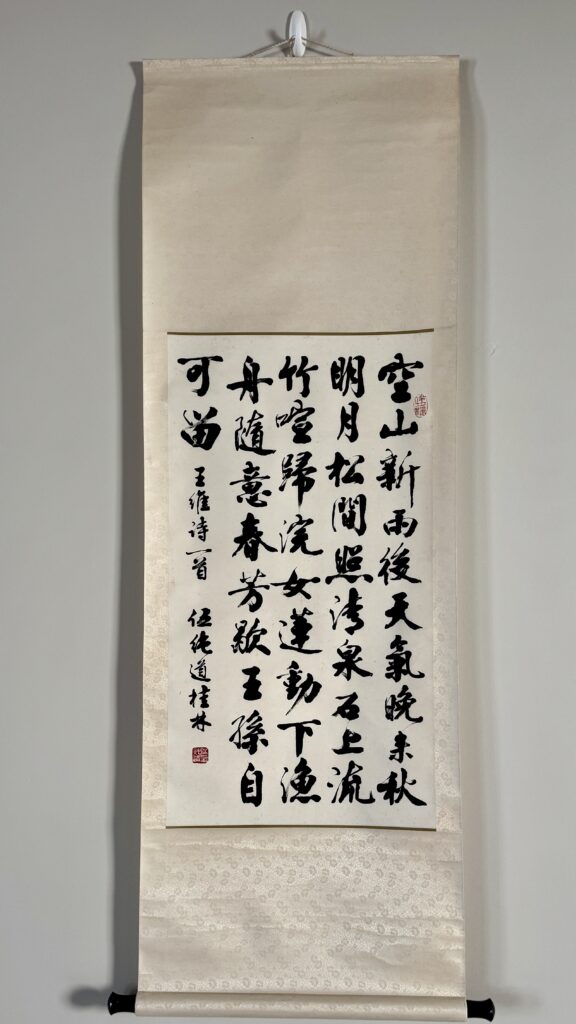
空山新雨后,天气晚来秋。明月松间照,清泉石上流。竹喧归浣女,莲动下渔舟。随意春芳歇,王孙自可留。
此诗描绘雨后山居的清朗秋景。山空气清,明月穿松,清泉流石,竹林喧响,渔舟轻动。动静交织之间,呈现出一种超然、澄明、宁静而富有生机的境界。
王维以画入诗,被誉为“诗中有画”。全诗既写自然之美,也寄寓隐逸之志与心灵的安顿。结句“王孙自可留”,表达对山林清境的留恋与人生归属的思考。
本幅作品以行书书写,笔势自然流畅,墨色沉稳而富变化。字形开合有度,行气贯通,既有山林之静气,又含溪流之动势,呼应诗中清雅空灵的意境。
Autumn Evening in the Mountains
Tang Dynasty · Wang Wei
After fresh rain in empty hills,
Autumn evening air gently fills.
Bright moon shines through pines above,
Clear springs flow on rocks below.
Bamboo whispers—maids return;
Lotus stirs a fishing boat.
Though springtime blooms may fade away,
Here the noble heart would gladly stay.
This poem portrays a serene mountain dwelling after rain. Moonlight filters through pine branches, a clear stream flows over stones, bamboo rustles as village women return, and a fishing boat moves gently beneath lotus leaves.
Wang Wei, often praised for blending painting into poetry, creates a scene where stillness and movement coexist. The poem expresses both natural beauty and a quiet yearning for spiritual retreat.
Written in expressive semi-cursive script, this scroll conveys fluidity and balance. The brushwork carries a sense of calm elegance, echoing the poem’s tranquil and contemplative mood.